
How to Maximize Royal Jellies in Grow a Garden Without Heavy Grinding
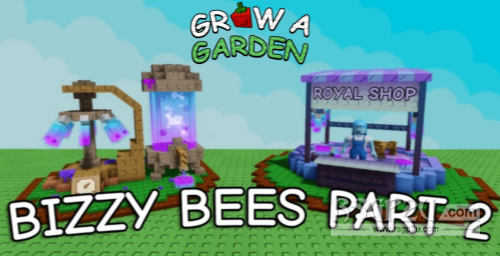
May-18-2026 PSTThe latest Busy Bees Part 2 update in Grow a Garden has introduced one of the most rewarding progression systems yet: Royal Jellies. These new resources are tied directly to the Queen Bee quest system and open the door to powerful rewards inside the Royal Shop, including the King Bee, Grow a Garden Items, and even Jelly Seed conversions. While the update initially sounds grind-heavy, the reality is surprisingly different. Unlocking Royal Jellies is actually one of the easiest farming systems the game has added so far—if players understand how to optimize their gardens and manage the refresh timers correctly.
Many players are wasting time overcomplicating the process, focusing on large-scale honey production or rare plants when the update is really built around efficiency, crop density, and quick harvesting cycles. The players who will earn the most Royal Jellies are not necessarily the richest gardeners, but the ones who know how to complete quests rapidly every time they refresh.
Understanding the Queen Bee Quest System
The entire Royal Jelly mechanic revolves around the Queen Bee. Once players interact with her and open the quest menu, they are presented with three quest categories: easy, medium, and hard. Each tier rewards a different amount of Royal Jellies, but the important thing to understand is that even the harder challenges are surprisingly manageable.
At first glance, some players may assume the hard quests require advanced progression or massive honey production. In reality, most tasks revolve around basic gardening activities players already perform naturally. Common objectives include:
Harvesting plants
Pollinating crops
Earning honey coins
Achieving godly pollinations
Managing crop production cycles
The simplicity of these objectives is what makes the system so efficient. Instead of demanding rare items or lengthy farming sessions, the game rewards consistent short bursts of activity.
For example, a quest like “Harvest 25 plants from your honey garden” sounds substantial, but with the right setup, it can be completed in less than a minute. Similarly, “Pollinate 75 plants” becomes trivial once a player fills their garden with fast-producing crops.
The update is clearly designed around accessibility. Players do not need endgame resources or premium items to participate effectively. Instead, the system rewards preparation and smart garden management.
Why Small Crops Are Secretly Overpowered
One of the biggest mistakes players make is focusing entirely on high-value plants. Large crops may generate more honey, but they are not necessarily the best option for completing Royal Jelly quests quickly.
The real MVPs of the Busy Bees Part 2 update are smaller, rapidly harvestable crops such as:
Strawberries
Blueberries
Tomatoes
These crops produce harvest opportunities constantly, which directly speeds up nearly every Queen Bee challenge.
Fast Harvesting Equals Fast Progression
When a quest asks players to harvest 25 plants, using large slow-growing crops becomes inefficient. But a dense garden full of strawberries or blueberries can complete the requirement almost instantly.
This creates an important shift in gameplay strategy. Instead of designing gardens purely around profit, players now benefit from creating hybrid layouts that prioritize both honey generation and challenge efficiency.
Even if these smaller crops generate less honey overall, they dramatically increase quest completion speed, which ultimately results in more Royal Jellies—and those jellies can unlock far more valuable rewards later.
Pollination Challenges Become Trivial
Pollination objectives scale directly with the number of active crops in a garden. A sparse setup filled with expensive plants may look impressive, but it struggles during quests that require large pollination numbers.
On the other hand, a crowded garden packed with rapid-growth crops allows pollination tasks to finish naturally during normal gameplay.
This means quantity now matters just as much as quality.
Players who want maximum Royal Jelly efficiency should dedicate at least part of their garden to low-maintenance, fast-cycling crops. Even placing them in corners or unused sections of the garden can massively improve challenge speed.
The Hidden Importance of Quest Refresh Timers
The true limiting factor of Royal Jelly farming is not difficulty—it is time.
Once all available quests are completed, players cannot continue farming until the Queen Bee challenges refresh again. Early observations suggest these refreshes happen somewhere between one and three hours, though the exact timing may vary.
This changes the optimal gameplay loop completely.
Instead of grinding endlessly for long sessions, the most efficient strategy is to:
Log in immediately after quests refresh
Complete all three quests rapidly
Claim the Royal Jellies
Spend or save them
Log off until the next refresh cycle
Because the quests are so short, many players can finish all available objectives in under two minutes. That means the best Royal Jelly strategy is based on consistency rather than marathon play sessions.
Players who check in multiple times throughout the day will progress significantly faster than players who grind for hours but miss refresh windows.
This system heavily rewards active but time-efficient gameplay.
Breaking Down the Easy, Medium, and Hard Quests
Another interesting part of the update is how approachable every difficulty tier feels.
Easy Quests
Easy quests are almost effortless and often involve very basic gardening tasks. These are designed so that even new players can participate immediately.
Examples include:
Harvesting small numbers of crops
Pollinating basic plants
Earning small honey amounts
These can typically be completed in seconds with even a modest garden.
Medium Quests
Medium quests introduce slightly larger requirements but remain highly manageable. Players with established gardens full of rapid-growth crops will still clear them extremely quickly.
These quests often ask for:
Larger pollination totals
More harvested plants
Increased honey earnings
The key advantage here is synergy. By simply harvesting and pollinating efficiently, players naturally complete multiple objectives simultaneously.
Hard Quests
The “hard” category sounds intimidating, but many players are discovering these tasks are still surprisingly easy.
Examples include:
Pollinate 200 plants
Achieve seven godly pollinations
These objectives sound large on paper, but with optimized crop density, they become far less intimidating than expected.
The update avoids punishing difficulty spikes. Instead, it encourages players to improve their garden layouts and understand the mechanics more deeply.
Building the Perfect Royal Jelly Garden
To maximize Royal Jelly gains, players should rethink how they organize their gardens.
Prioritize Crop Density
The best gardens for this update are dense and active. More plants mean:
More harvest opportunities
Faster pollination counts
Greater quest efficiency
Spacing plants too widely or relying only on large premium crops can actually slow progression.
Use Fast-Growing Crops
Tomatoes, strawberries, and blueberries are currently among the best crops for challenge farming because they:
Produce quickly
Can be harvested frequently
Help complete multiple quest types simultaneously
Even though their direct honey output may be lower, their contribution to Royal Jelly farming is enormous.
Create Dedicated Quest Zones
Some players may benefit from dividing their gardens into sections:
Honey production area
Fast-harvest challenge area
Pollination-heavy crop clusters
This allows for better optimization without sacrificing long-term profits.
Keep Spare Seeds Ready
Because quests refresh frequently, having backup seeds ready prevents downtime. Players who immediately replant after harvesting maintain maximum efficiency throughout each refresh cycle.
The Royal Shop Makes the Grind Worth It
All of this farming leads to the Royal Shop, which is where the Busy Bees Part 2 update truly shines.
Royal Jellies can be exchanged for several powerful rewards, including:
The King Bee
Brand-new seeds
Jelly Seed conversions
This gives players meaningful reasons to continue farming consistently. The rewards are not just cosmetic—they can actively improve garden performance and unlock new gameplay possibilities.
The Jelly Seed conversion system is especially interesting because it allows players to transform existing seeds into upgraded jelly variants, potentially creating entirely new optimization paths for advanced gardeners.
Because Royal Jellies are tied to repeatable quests rather than random drops, progression feels reliable and rewarding. Players always know what they need to do, and success depends more on efficiency than luck cheap Grow a Garden Items.
Why This Update Works So Well
One of the smartest things about the Busy Bees Part 2 update is how it respects player time.
Many live-service games rely on excessive grinding, but Grow a Garden approaches progression differently here. The game encourages players to:
Log in briefly
Complete meaningful tasks
Earn rewards quickly
Return later for another refresh
This structure keeps the gameplay loop engaging without becoming exhausting.
The quests also encourage better understanding of core gardening mechanics. Players naturally learn:
Which crops are efficient
How pollination works
Why garden density matters
How to optimize layouts
Instead of adding artificial complexity, the update deepens existing systems in a rewarding way.