
MLB The Show 26 Guide: How to Use Adam Jones and Master the Center Field Meta
May-27-2026 PSTIf there’s one thing MLB The Show 26 continues to make clear, it’s that the difference between winning and losing at great difficulty isn’t just pitch recognition—it’s roster construction, swing discipline, and understanding how certain cards actually play versus how their attributes look on paper.
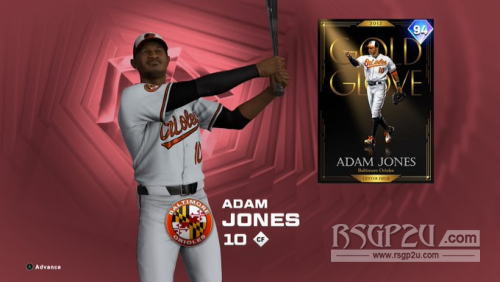
A perfect example of this comes from the 94 overall center fielder Adam Jones, a card that looks “good” at first glance—but in practice, behaves like one of the most complete outfielders in the game when used correctly.
This guide breaks down how to maximize elite center fielders like Jones, how to build around them in a God Squad, and—most importantly—how to stop losing games to timing errors, MLB The Show 26 Stubs, and PCI frustration.
1. Why 5-Tool Center Fielders Matter More Than Ever
In MLB The Show 26, center field has quietly become one of the most impactful defensive positions in the entire game cycle. Speed, arm strength, and reaction animations all matter more due to how frequently gaps are created by high-contact swings and aggressive hitting metas.
A card like Adam Jones stands out because he blends:
High contact (especially after attribute boosts)
Solid power thresholds (75+ power plays above expectations)
81 speed for gap coverage and base running pressure
85 arm strength for stopping extra bases
A smooth, reliable swing animation
Even though his raw power rating (around 77) doesn’t look elite, the game engine in The Show 26 heavily rewards “usable power” rather than max ratings. Anything above ~75 power can realistically leave the yard with good timing and squared PCI placement.
That’s why cards like Jones feel better than their overall suggests—they’re mechanically efficient.
2. The Contact-Speed Meta: Why Boosting Jones Changes Everything
One of the most effective strategies in MLB The Show 26 is applying contact-based boosts rather than raw power boosts. In practice, this turns balanced hitters into elite on-base machines with surprising pop.
With a contact-speed mod applied to Adam Jones, his hitting profile jumps into elite territory:
Contact vs RHP/LHP: near 99–103 range
Vision: ~91 (reduces chase penalty)
Clutch: ~97 (huge in runners-in-scoring-position moments)
Speed increases to ~90+ effective base running value
This is where Jones becomes more than a “good card.” He becomes a lineup stabilizer—someone who consistently puts the ball in play even in high-pressure, Legend difficulty environments.
3. Why Swing Feel Matters More Than Attributes
One of the biggest lessons from high-level gameplay is this: swing animation > attributes.
Two players with identical ratings can feel completely different depending on:
Load timing
Follow-through animation speed
PCI “stickiness” after contact input
Exit velocity consistency windows
Adam Jones benefits heavily here because his swing:
Has a compact load
Recovers quickly for inside pitches
Produces consistent line-drive trajectories
Doesn’t “drag” PCI timing as much as slower swings
This is why even when players struggle early with him (especially in debut games), the underlying data still suggests long-term success.
4. The Debut Game Problem: Why New Cards Always Feel Worse at First
A recurring issue in The Show 26 is what players call the “debut slump.”
When you first bring in a new card like Adam Jones, you often experience:
Early strikeouts on timing mismatches
Warning track “almost homers”
Foul balls on perfect swings
PCI slightly off-center despite good timing
This isn’t RNG—it’s adjustment lag. You’re learning:
New strike zone visual timing
New swing tempo
New pitch recognition windows against opponent meta pitchers
Once adjusted, performance stabilizes dramatically.
5. Pitch Meta Reality: Outlier Fastballs and Slider Abuse
No discussion of MLB The Show 26 is complete without addressing the most dominant pitching mechanic: Outlier fastballs and high-velocity sliders.
Pitchers with Outlier-style velocity spikes (e.g., 102–103 mph fastballs combined with 95+ mph sliders) fundamentally compress reaction time.
The result:
Fastballs feel “teleport fast”
Sliders tunnel directly off fastball paths
PCI input becomes guess-heavy instead of reaction-based
This is where many hitters struggle—not because of bad swings, but because the reaction window is artificially shortened.
Against this meta, even strong hitters like Adam Jones require:
Earlier swing commitment
Reduced PCI overcorrection
More selective pitch targeting (especially avoiding high fastballs)
6. PCI Discipline: The Most Important Skill in The Game
If there is one repeated mistake in high-level play, it’s PCI panic—moving the reticle too aggressively after pitch recognition.
Common failures include:
Dropping PCI too low on fastballs
Overreacting to inside pitches
Chasing high out-of-zone heaters
Swinging at “good timing, bad location” pitches
In the gameplay context above, a key pattern appears:
Players are often getting “perfect timing” swings but still producing foul balls or weak contact because PCI placement is slightly off.
This leads to frustration—but the fix is simple:
Rule: Timing is only 50% of the swing equation
The other 50% is PCI center contact. Without both aligned, even perfect swings fail.
7. Stadium Elevation and Why It Changes Everything
Playing in a max-elevated created stadium dramatically shifts offensive expectations.
Effects include:
Higher exit velocity carry
Increased home run probability on fly balls
Reduced importance of perfect launch angle optimization
This is why debut games often feel inconsistent—especially when mixing:
High elevation physics
High-velocity pitching
Cold timing adjustment to new cards
Once players stabilize, offensive output spikes significantly.
8. Building the God Squad: Structure Over Stars
A “God Squad” in MLB The Show 26 isn’t just about stacking 99 overalls. It’s about balance:
Core principles:
2–3 elite contact hitters
2–3 power threats
At least 1 speed-first table setter
Elite center field defense anchor
Reliable bullpen arms with controllable pitches
In the example roster structure, the key idea is synergy, not just rating stacking. Cards like Adam Jones fit perfectly because they:
Cover defensive range in center
Provide consistent offensive contact
Don’t require perfect swings to contribute
9. Why Veteran Stars Still Dominate Meta Builds
Even in modern lineups filled with boosted cards, classic players remain extremely viable.
Examples:
Bryce Harper – elite left-handed power presence
Alex Bregman – high discipline and clutch value
Miguel Cabrera – still dominates defensive matchups in-game
Jackie Robinson – elite speed and contact versatility
Troy Tulowitzki – reliable right-handed pop and defense
These players remain relevant because The Show 26 heavily rewards swing consistency and positional reliability over pure rating inflation.
10. Pitching Awareness: The Hidden Half of Hitting Success
A major takeaway from high-level games is that hitting is not isolated—it is reactive to pitching identity.
When facing elite arms (especially Outlier-heavy pitchers), success depends on:
Identifying pitch patterns early
Avoiding repetitive swing habits (like always chasing high fastballs)
Accepting that some at-bats are “survival at-bats.”
Even elite hitters will struggle if they fall into predictable swing traps.
11. Mental Reset: Why Inconsistent Games Happen
One of the most important psychological aspects of The Show 26 is variance.
You can have:
One game where everything is perfect-perfect home runs
Another where perfect swings become lineouts or foul balls
This is not purely skill degradation—it’s variance interacting with:
PCI variance
Pitch selection randomness
Opponent sequencing
Timing window compression
The key is adjustment, not frustration escalation.
Conclusion: How to Actually Improve With Cards Like Adam Jones
The 94 overall Adam Jones represents a perfect case study in how MLB The Show 26 really works:
Attributes matter, but swing feel matters more
PCI discipline is more important than timing perfection
Pitch meta awareness determines long-term success
Early struggles with new cards are normal, not failure
Balanced God Squads outperform pure power stacks
If there’s one takeaway, it’s this:
You don’t improve in The Show 26 by swinging better—you improve by swinging smarter, more selectively buy MLB The Show 26 Stubs, and with a clearer understanding of pitch context.
Once that clicks, cards like Adam Jones stop feeling inconsistent—and start feeling unstoppable.